Executive summary
Most operating organizations already create the information they need to manage risk and performance: inspections, training records, equipment checks, incident reports, procedures and acknowledgments. The problem is that this information lives in different places, owned by different departments, structured in different ways. This paper describes the cost of fragmentation and a practical model for connecting it.
The fragmentation tax
- Re-entry. The same information typed into multiple systems.
- Latency. Leaders see problems weeks after the field does.
- Blind spots. No one sees that the forklift with the open defect is operated by the employee whose evaluation expired.
- Audit scramble. Evidence reconstructed rather than retrieved.
The connected operating model
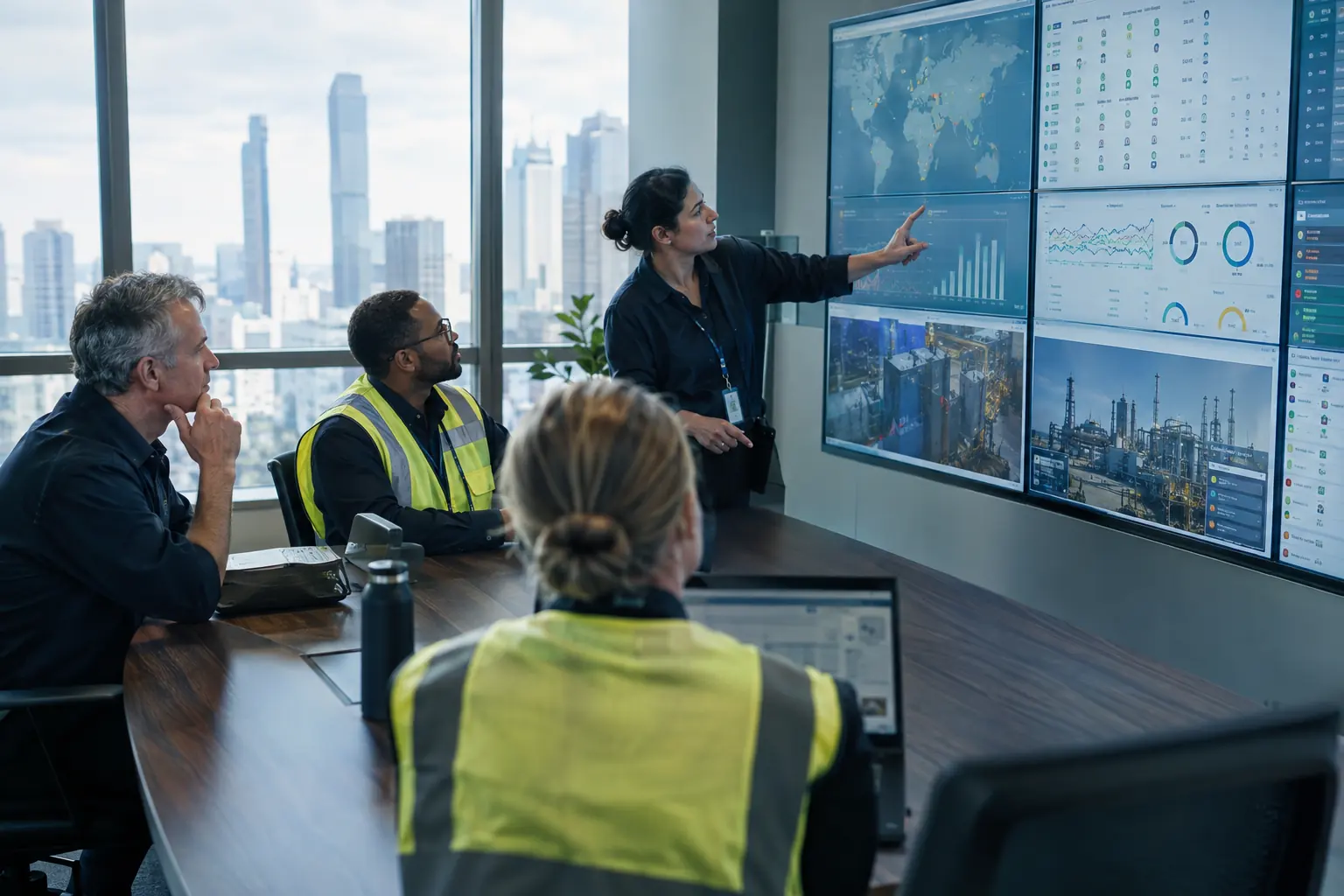
A connected model treats people, assets, locations and documents as shared records that every workflow references. An inspection finding, an incident and an equipment defect all create the same kind of corrective action. A procedure revision automatically creates training and acknowledgment requirements. Leadership views are built from the same records the field uses.
Five design principles
- One record per person, asset and location
- Workflows that cross modules without re-entry
- Role-based experiences for field, supervisor and executive
- Evidence captured at the point of work
- AI that assists people with transparent sources
Getting started
Begin with one workflow that crosses departments and costs the organization time today. Connect it, measure it, then expand.